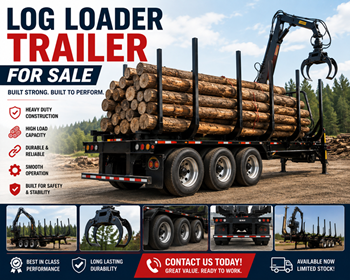
Timber transportation can affect forest soil, vegetation, and access routes when machinery repeatedly travels over sensitive ground. Choosing and operating a logging trailer with attention to terrain conditions can help reduce unnecessary disturbance. Effective woodland management combines suitable equipment, thoughtful route planning, and careful decisions about when transportation should take place.
Understanding Soil Sensitivity
Forest soils vary considerably in strength and moisture content.
Dry, firm surfaces may support equipment movement more effectively than saturated ground.
Repeated travel over wet soil can create ruts, compact surface layers, and damage vegetation.
These effects may persist beyond the immediate transportation activity.
Recognize Vulnerable Areas
Low-lying sections, drainage channels, and naturally wet ground deserve particular attention.
Operators should identify sensitive areas before establishing timber transportation routes.
Avoid unnecessary crossings of streams or drainage features.
Where crossings are unavoidable, follow applicable environmental requirements and approved operating practices.
Plan Routes Before Moving Timber
Route selection influences both productivity and environmental impact.
A shorter route is not always the most suitable option if it passes through unstable ground.
A logging trailer should travel along routes appropriate for the towing equipment, load, and prevailing conditions.
Use Established Access Where Practical
Existing woodland tracks may reduce the need to disturb additional ground.
However, their condition must still be assessed.
Check for erosion, weakened surfaces, restricted turning areas, and obstacles.
Do not assume a previously used route remains safe after heavy rainfall or seasonal changes.
Consider Equipment Weight and Ground Pressure
The total weight of loaded equipment influences its interaction with the soil.
Tire configuration, axle arrangement, and load distribution can also affect ground pressure.
Avoid Excessive Loading
Overloading increases mechanical stress and may worsen ground disturbance.
Stay within rated capacities and account for the towing machine’s limitations.
Balance the load appropriately and avoid sudden steering or braking movements.
Smooth operation can help reduce unnecessary wheel spin and surface damage.
Adjust Work According to Weather
Weather conditions can change woodland accessibility quickly.
Heavy rainfall may weaken surfaces that previously supported transportation.
Freeze-thaw cycles can create unstable ground, even when the surface appears firm.
Know When to Delay Movement
Continuing work during unsuitable conditions may create damage that requires significant restoration.
Assess whether postponing transportation would reduce risk.
When conditions deteriorate, reassess routes and equipment stability before proceeding.
Reduce Repeated Travel
Efficient timber collection can lower the number of journeys required.
Organize logs into accessible collection areas where doing so is permitted and environmentally appropriate.
Coordinate cutting and transportation activities to avoid unnecessary movement.
Maintain Consistent Collection Points
Clearly identified collection points can simplify loading.
They also help operators avoid creating multiple informal routes through woodland vegetation.
Ensure collection areas provide stable access and sufficient maneuvering space.
Inspect Equipment Regularly
Mechanical problems can increase the risk of ground damage and unsafe operation.
Inspect tires, connections, restraints, and moving components.
Address issues that affect traction, steering, or load stability.
Operators seeking further regional information may consult a woodland transportation equipment reference.
Conclusion
A logging trailer can support responsible woodland transportation when its operation accounts for soil conditions, route suitability, and load management. Minimizing unnecessary travel, avoiding sensitive ground, and adapting to changing weather can help reduce environmental disturbance. Thoughtful transportation planning benefits both equipment performance and the long-term condition of working woodland areas.